This Sporting Life
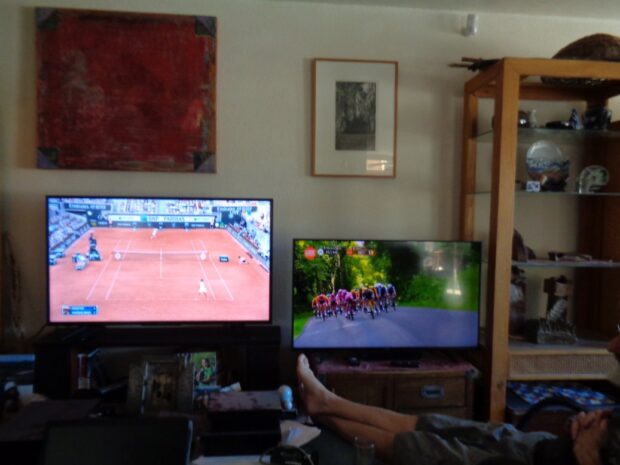
June 12th, 2023My painting, etching, and Ceramics sculptures competing with French Open Players and Bikers.
Elina Svitolina married Gael Monfils
ELINA Svitolina and Gaël Monfils have been married for nearly two years.

Vitro NasuIconoclastic Incubator
|
My painting, etching, and Ceramics sculptures competing with French Open Players and Bikers.
Elina Svitolina married Gael Monfils
ELINA Svitolina and Gaël Monfils have been married for nearly two years.
Painter Françoise Gilot, whose 1964 memoir detailing her tumultuous, decade-long relationship with Pablo Picasso became an international bestseller, died June 6 in New York at the age of 101. Having met Picasso when she was just twenty-one and he forty years older, she gave birth to two of his children—Claude Picasso and Paloma Picasso—before becoming, by his admission, the only woman ever to leave him.
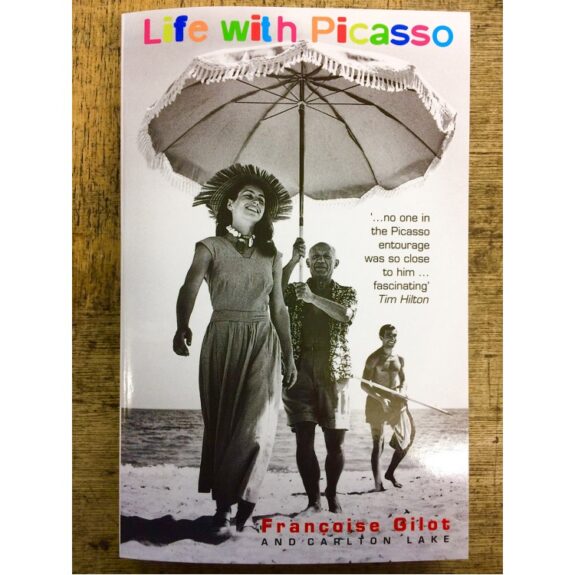
We all learned a lot about Picasso from her book. Merci.
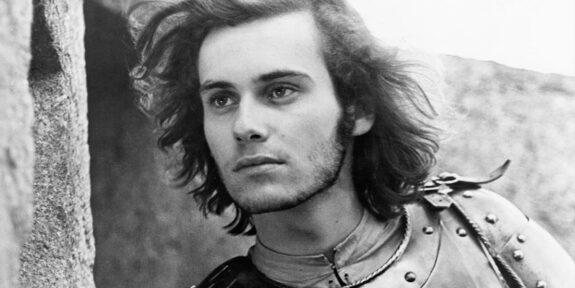
(Luc Simon)
(On Facebook, I was told that the actor who was directed by Robert Bresson in Lancelot du Lac was her husband).
Natascha McElhone played her in “Surviving Picasso”, Merchant Ivory production.

(“Air Doll”, Joe Odagiri and the amazing Korean Actress directed by Hirokazu Koreeda)
(Makanai – Koreeda drected Netflix series)
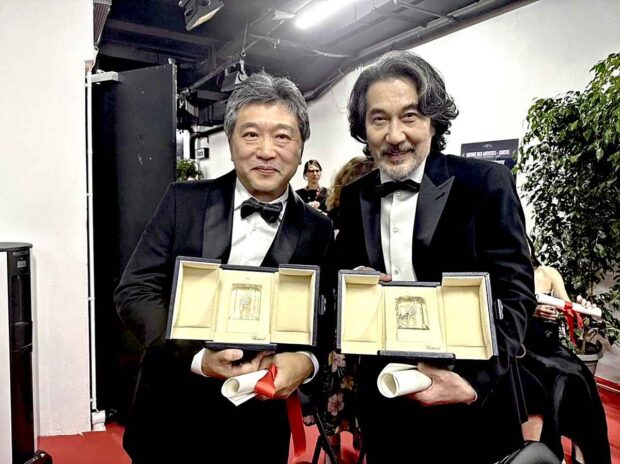
(Hirokazu Koreeda won Screeplay award, accepting for Yuji Sakamoto, Koji Yakusho for best actor at Cannes 2023 working with Vim Wenders.
previously Koreeda directed Koji Yakusho in “The Third Murder”)
Happy birthday Hirokazu Koreeda
See more photos for Koreeda from previoua poar – Shoplifters wins Palme d”Or at Cannes 2018


(Rainer Werner Fassbinder & Margit Carstensen on the set of “Bremer Freiheit,” 1972)
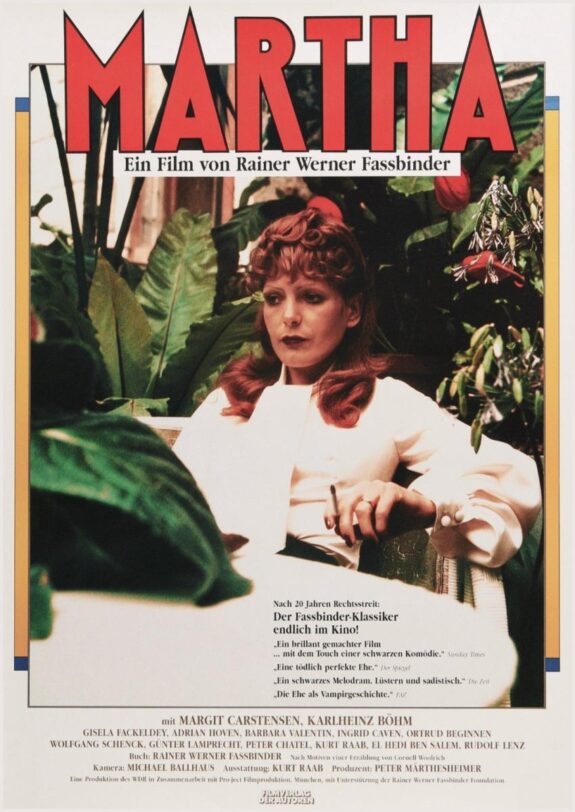
Margit Carstensen passed away one day after Fassbinder’s birthday (May 31).
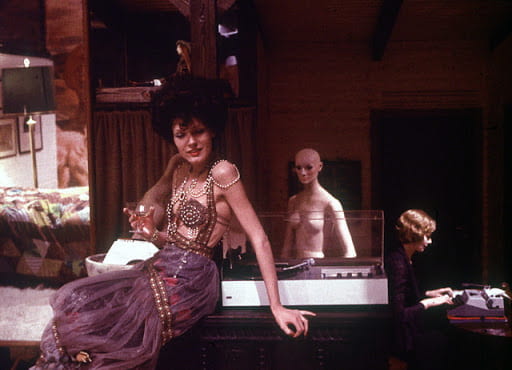
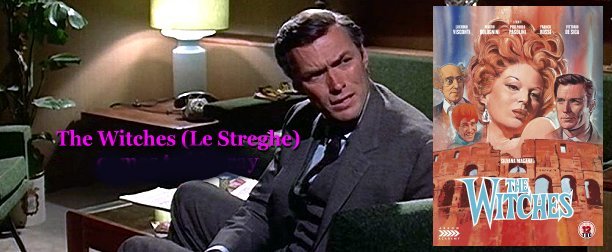
Clint Eastwood and Silvana Mangano in “Le streghe” (ENG: “The Witches”), a 1967 Italian anthology film consisting of five comic stories, directed by Luchino Visconti, Franco Rossi, Pier Paolo Pasolini, Mauro Bolognini and Vittorio De Sica. Each story is about witches and features different actors, except for Mangano who stars in all segments.Film production took place in the period in which Eastwood was often in Italy because he was working with Sergio Leone in his epic ‘dollar trilogy’ Spaghetti Western movies. Perhaps, it is precisely for this reason that the screenwriters chose a particularly ironic role for him: in the last segment of this movie (“An Evening Like the Others”, directed by Vittorio De Sica), he plays the part of a Western movie lover who does not know how to change the flat relationship with his wife, even going as far as to disguise himself as a gunslinger to entertain herReportedly, Clint Eastwood was given the choice of taking $25,000 in cash or $20,000 plus a new Ferrari sports car by producer Dino De Laurentiis to play in this movie. He chose the money and the Ferrari (a spectacular 275 GTB), so that his agent wouldn’t be able to get ten percent of the car.
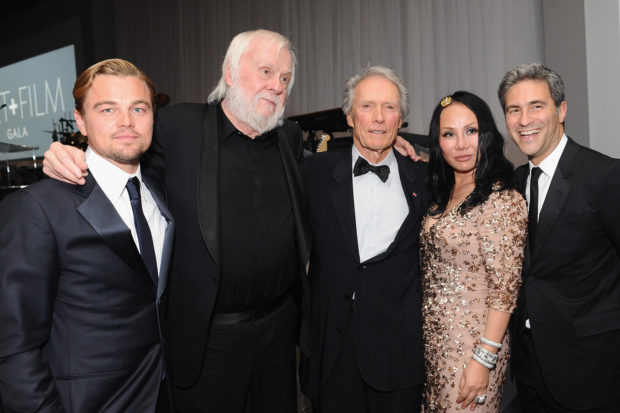
LACMA Art + Film Gala Honoring Clint Eastwood And John Baldessari Presented By Gucci
Focus on outdated lingo and Michel Legrand-scored beach montages and risk missing the inexorable peeling of the values from bourgeoisie and counterculture alike, Eastwood’s Sirkian attention to vivid reds within hollow interiors, the pointed way the protagonist is exposed in all his male dread by a Mephistophelian sauna comrade, and Holden’s abrupt realization, while paying for his girlfriend’s new duds, that he is now playing the Norma Desmond part. (via MUBI)
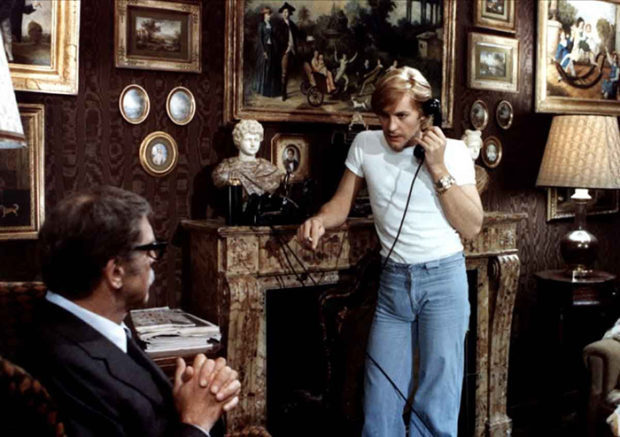
Conversation Piece directed by Luchino Visconti
RIP Helmut Berger passed away.
Helmut Berger was an Austrian actor, known for his portrayal of narcissistic and sexually-ambiguous characters. He was one of the stars of the European cinema in the late 1960s and 1970s, and is regarded as a sex symbol and pop icon of that period.[1]
He is most famous for his work with Luchino Visconti, particularly in his performance as King Ludwig II of Bavaria in Ludwig, for which he received a special David di Donatello award, and his performance in The Damned for which he was nominated for a Golden Globe Award. (via wiki)
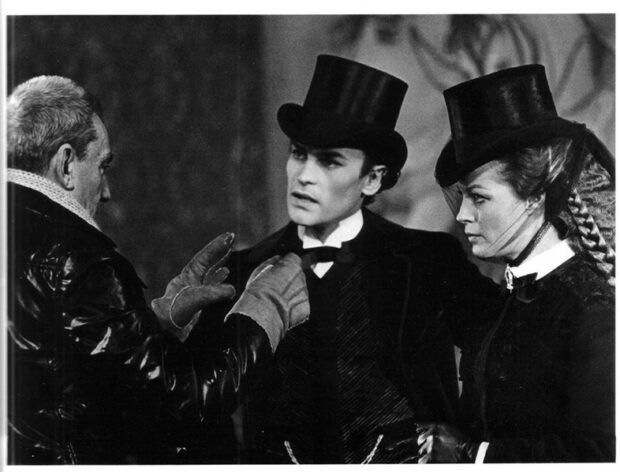
(Luchino Visconti, Helmut Berger and Romy Schneider on the set of Ludvig, 1972)
Documentary Portrait of Visconti’s Greatest Muse, Helmut Berger
“I am trying to discover who I am through making movies. I see myself as being confined in a cage of Japanese culture and the cage of being a man. I have to look at myself from an outsider’s point of view when I make my films.” Itami Juzo.
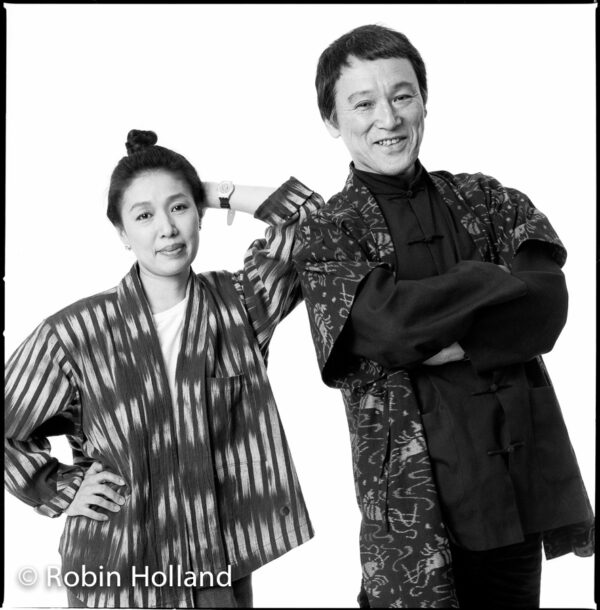
Nobuko Miyamoto and Juzo Itami, NYC, 4/12/88
Itami and Nobuko Miyamoto, Creative Marriage
Itami was the brother-in-law of Kenzaburō Ōe and an uncle of Hikari Ōe.
A Quiet Life – Criterion based on a novel by Kenzaburo Oe, directed by Itami Juzo.
Itami Juzo was cast in “Lord Jim” acted with Peter O’Toole. When Peter O’Toole visited Japan, Itami took him to meet Akira Kurosawa when he was
filming, “Red Beard”.
Movies & TV Spotlight: Juzo Itami — The Revered Tampopo Director Who Died in Mysterious Circumstances
Happy Mother’s Day
Gordon Lightfoot – Nov 17, 1938 – May 1 2023
(See photo of Gordon and Bob Dylan + listen to his songs)
The title comes from a section of Arizona State Route 74 in north Phoenix. Said Lightfoot, “I thought it would make a good title for a song. I wrote it down, put it in my suitcase and it stayed there for eight months.”[2] The song employs “Carefree Highway” as a metaphor for the state of mind where the singer seeks escape from his ruminations over a long ago failed affair with a woman named Ann. Lightfoot has stated that Ann actually was the name of a woman Lightfoot romanced when he was age 22:[2] “It [was] one of those situations where you meet that one woman who knocks you out and then leaves you standing there and says she’s on her way. (via wiki Carefree Highway)
Philippe Sollers passed away
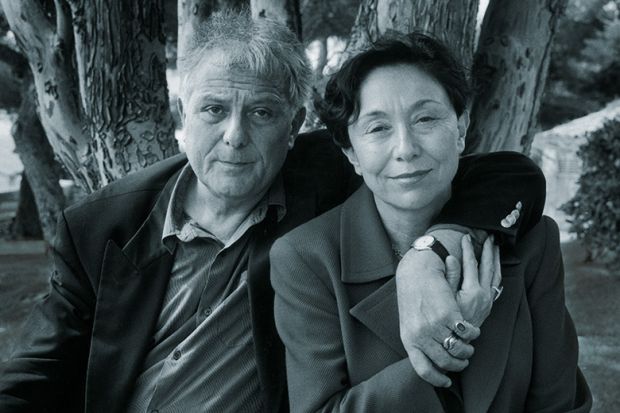
(Philippe Sollers and Julia Kristeva)
Derrida’s closest intellectual comrade in the late 1960s and early 1970s was the writer and editor Philippe Sollers, who published a number of Derrida’s early essays in Tel Quel. But the friendship soured. Sollers wanted Tel Quel to become the cultural journal of the French Communist Party (PCF) and enforced strict obedience to the Moscow line. At a dinner with the Derridas, one telquelian launched into a passionate defence of the Soviet invasion of Prague, where Marguerite’s relatives lived. It did not go down well. Sollers was also worried that Derrida’s reputation might eclipse his own, suspecting that Derrida’s essay in praise of his novel, Numbers, was a covert ‘attempt at appropriation’. In 1967 Sollers had secretly married the Bulgarian literary theorist Julia Kristeva, whose career he was also keen to promote over Derrida’s. Rebuffed in their efforts to capture the cultural apparatus of the PCF, in the early 1970s Sollers and Kristeva converted to Maoism. This led to a deepening estrangement from Derrida, whose friend Lucien Bianco, a distinguished Sinologist, had disabused him of any illusions about revolutionary China. When Derrida gave an interview to La Nouvelle Critique, a PCF literary journal, Sollers and Kristeva protested by ‘boycotting’ a dinner in his honour. Derrida’s Tel Quel years were over. Years later, in her novel The Samurai, Kristeva would mockingly depict Derrida as Saïda, founder of ‘condestruction theory’, a man who was so attractive to American feminists that they ‘all became “condestructivists”’.)(Via Not In the Mood – a review of Derrida’s bio..)
In the Mood for Julia Kristeva – June 24, 2013
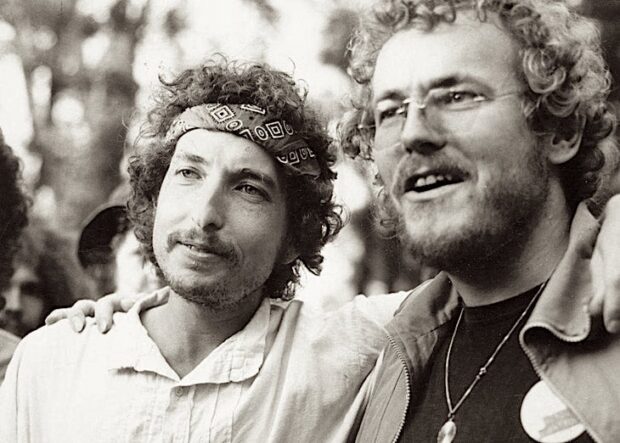
Bob Dylan and Gordon Lightfoot
I can’t think of any Gordon Lightfoot song I don’t like. Everytime I hear a song of his, it’s like I wish it would last forever.
-Bob Dylan
Here are 10 popular renditions.
https://tubitv.com/movies/551922/gordon-lightfoot-if-you-could-read-my-mind (A great documentary film – a must see).